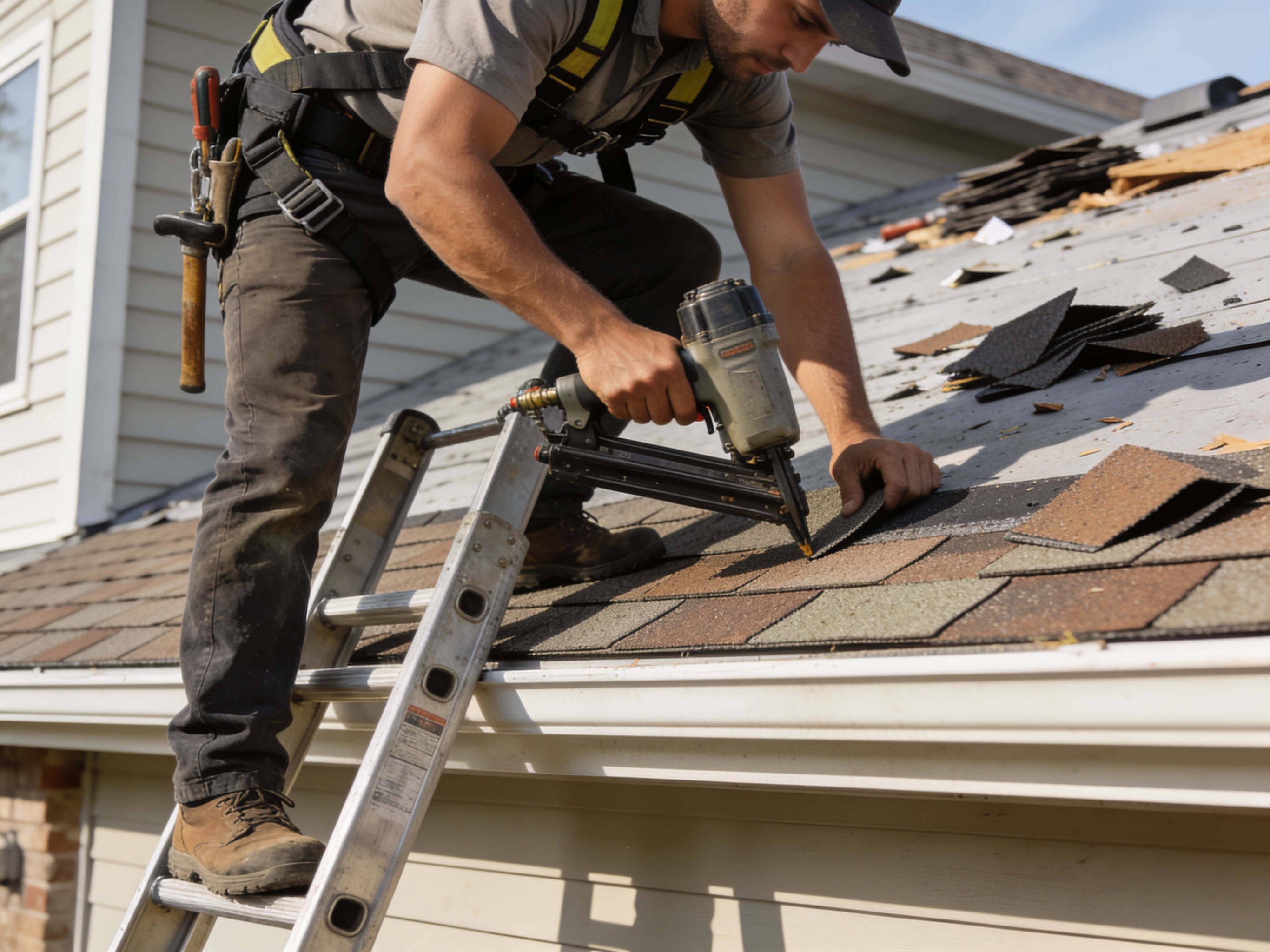
College Station homes in neighborhoods such as Castlegate and Emerald Forest often feature asphalt shingle roofs installed decades ago on ranch-style and two-story houses common near Texas A&M University. Hot summers combined with high humidity accelerate granule loss and blistering, while occasional winter freezes can crack flashing around chimneys and skylights. When leaks appear near Kyle Field or the George Bush Presidential Library area, the underlying decking frequently shows rot that requires full removal rather than patch work.
Replacement work here must account for the clay-heavy soils in Southwood Valley that expand and contract, shifting roof planes over time. Pros we connect you with remove existing layers down to the deck, replace damaged plywood, and install ice-and-water shield along eaves plus synthetic underlayment across the field. Ridge vent installation improves airflow in attics that trap moisture during long humid periods, preventing the mold growth that appears in many Bryan-College Station homes without proper ventilation.
Edge cases include steep pitches on newer Castlegate additions and limited access around mature trees common in Wolf Pen Creek. Local building practices call for enhanced fastening in wind-prone zones and proper drip edge to direct water away from fascia boards that deteriorate quickly in the subtropical climate. The pros we connect you with coordinate disposal of old materials at approved Brazos County sites and verify new roofing meets current wind and uplift standards without shortcuts that later cause callbacks after summer storms.
Technician insight
In College Station, the thing that catches most people out with Roof Replacement is skipping full deck inspection on 1980s and 1990s homes in Southwood Valley and Castlegate where hidden rot from poor attic ventilation spreads fast once humidity gets under the shingles.
Full Replacement After Summer Storm Damage
A Castlegate homeowner reported interior leaks following heavy rain. Inspection revealed widespread shingle failure and rotted decking from years of trapped moisture. The pros we connect you with removed three layers, replaced damaged plywood, added proper underlayment and ridge venting, then installed new shingles matched to the home's pitch. The roof now handles the area's hot humid summers without recurring leaks.
How it works
- 1
Initial Assessment
The pros we connect you with inspect the entire roof surface, attic, and flashing on College Station homes to identify extent of damage from humidity and prior weather events.
- 2
Material Selection and Removal
Homeowners choose shingles or metal suited to Brazos County conditions; old roofing is stripped to the deck with debris hauled away from neighborhoods like Northgate.
- 3
Deck Repair and Underlayment
Damaged plywood is replaced, synthetic underlayment and ice shield are applied, and ventilation upgrades address moisture issues typical in humid summers.
- 4
Installation and Final Inspection
New roofing is fastened per local wind standards, flashing is renewed around chimneys, and the site is cleaned before walkthrough with the homeowner.
Pricing
Pricing varies by roof size, chosen materials, and access conditions typical of Brazos County properties.