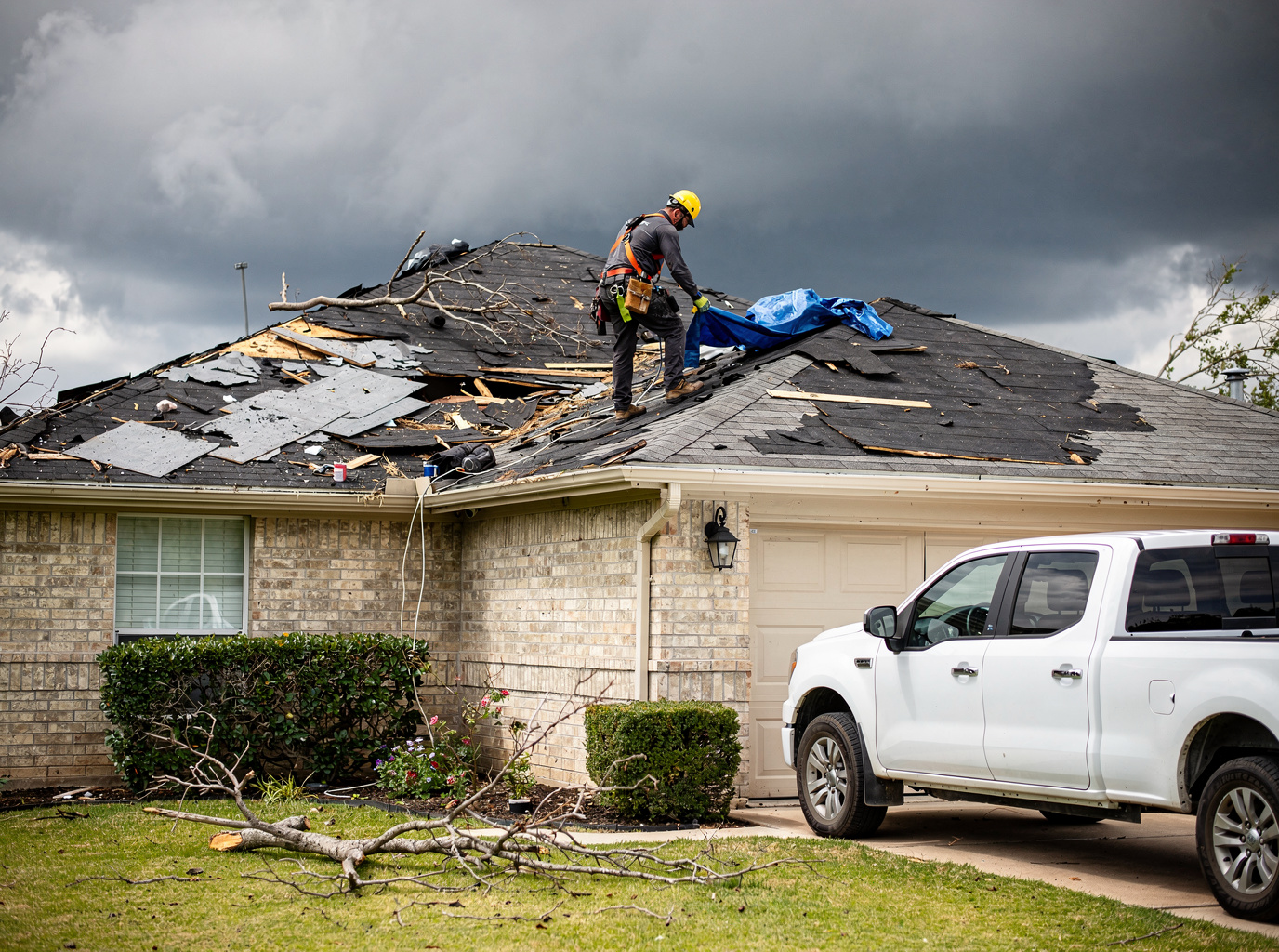
College Station sits in a humid subtropical climate where sudden spring and summer storms bring high winds, hail and driving rain that quickly exploit weak points on asphalt shingle and metal roofs common in neighborhoods like Castlegate and Emerald Forest. Older homes near Kyle Field and the George Bush Presidential Library often have roofs installed decades ago that lack modern underlayment, so wind-driven water finds its way under flashing at valleys and chimneys faster than in newer Bryan College Station subdivisions. The pros we connect you with inspect for granule loss, dented panels and lifted shingles rather than assuming every leak is a simple patch job.
After major weather events, standing water can pool on low-slope sections common in Wolf Pen Creek homes and accelerate deck rot if not addressed before the next rain. Brazos County building practices require proper ventilation and ice-and-water shield in vulnerable areas, yet many roofs were installed before current standards. The pros we connect you with check attic insulation for moisture, examine ridge vents for wind-driven debris and document hail hits on south-facing slopes that receive the hardest impact from afternoon storms rolling through the area.
Terrain around Southwood Valley and Northgate creates micro-climates where trees drop limbs onto roofs during high winds, creating punctures that later widen under repeated summer downpours. The pros we connect you with focus on matching existing materials so repairs blend with surrounding sections rather than creating obvious patches that homeowners later regret when selling near Texas A&M University.
Mild winters do not eliminate risk because freeze-thaw cycles still occur and can widen existing storm cracks in flashing. The pros we connect you with carry tarps and temporary ridge caps to secure homes quickly when full replacement cannot be scheduled immediately after a severe weather event.
Technician insight
In College Station, the thing that catches most people out with Storm Damage Roof Repair is how the humid subtropical climate drives rapid mold growth under lifted shingles after even moderate hail events in older Northgate homes near Texas A&M; homeowners often wait too long and the deck softens before we reach it.
Wind-Driven Leak After Spring Storm
A Southwood Valley homeowner noticed ceiling stains following high winds that stripped shingles near a valley. The pros we connect you with found torn underlayment and early deck softening from pooled water. They replaced the affected valley section with new ice-and-water shield and matching shingles, then confirmed the attic stayed dry through the next rain.
How it works
- 1
Storm Damage Assessment
The pros we connect you with walk the roof and attic to locate wind uplift, hail dents and water intrusion points specific to College Station construction.
- 2
Documentation and Scope
Photos and measurements are taken to outline repairs needed on homes in areas like Castlegate or near the George Bush Presidential Library.
- 3
Temporary Securing
Tarp or ridge cap installation protects the structure until permanent fixes can be completed after Brazos County weather events.
- 4
Targeted Repair
Shingle replacement, flashing reseal or panel straightening is performed using materials that match the existing roof in Northgate and Southwood Valley homes.
- 5
Final Walkthrough
The pros we connect you with confirm no active leaks remain and review attic conditions with the homeowner.
Pricing
Pricing varies based on storm damage extent, roof access and materials required for College Station homes.